
In an era of 15k tools, AI Agents, and Big Data, customer experiences are still far from seamless. Marketing and product teams sit on more technology, data, and automation capabilities than at any point in history.
Yet customer experiences often feel slower, more fragmented, and less relevant. The problem isn’t a lack of tools. It’s a lack of clarity about what drives value for the company and the customer.
Most organisations can’t explain which customer behaviours actually drive value, which journeys deserve automation, or which use cases are worth scaling. As a result, stacks grow, data piles up, costs rise, and value stalls.
Value Engineering changes that. It starts not with technology, but with revenue: who your best customers are, what they do differently, where they get stuck, and how they accelerate. These patterns already exist inside your business — hidden in plain sight: your data. When teams learn to surface them, they stop guessing and start building business cases anchored in evidence.
This article introduces the basics of Value Engineering: why it matters, what it is, and how to do it. It gives you the foundation to focus your technology, data, and content on the small number of customer behaviours that generate the majority of value. Because once you know where value truly comes from, every decision becomes simpler, faster, and far more effective.
The Basics — The Why, What, and How
Value Engineering starts with a simple observation: only a small portion of your technology, data, and workflows actually drives the majority of your company's revenue. Yet most organisations unknowingly deploy their technology the opposite way: they invest heavily in automating exceptions, edge cases, and low-volume scenarios, while under-supporting the predictable, repeatable customer behaviours that actually generate revenue.
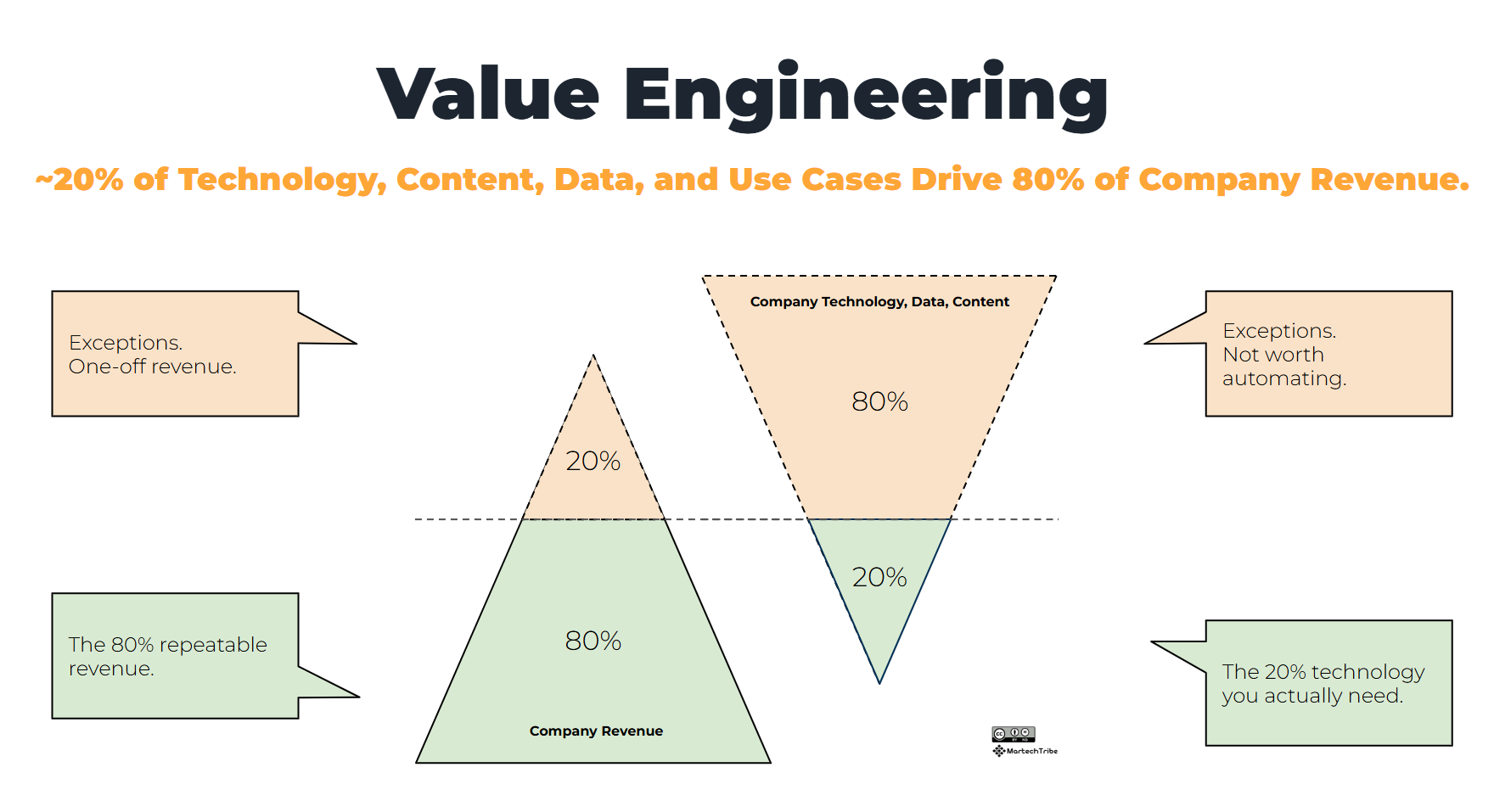
The graph illustrates this perfectly — 80% of repeatable revenue stems from a 20% slice of predictable, automatable behaviour. Yet most companies spread their technology budget across edge cases that barely matter. Value Engineering’s job is to flip that imbalance.
This imbalance is clearly visible in the two triangles: revenue concentrates in the broad, stable base, while technology investments cluster in the narrow, unstable tip. This gap between where revenue comes from and where technology is deployed is exactly the problem Value Engineering solves. It will lead to the optimal Martech utilization rate — not using all tools and functionality, but using the right ones.
What is Value Engineering?
Value Engineering is a discipline that reverse-engineers your revenue to identify the Best-Customer Profiles, the biggest friction points, the uptake triggers, and the automation paths that consistently convert. It strips away opinions and focuses on proven revenue patterns. Every customer today is proven revenue, and every customer once was a lead — meaning the blueprint already exists in your data.
Value Engineering asks three questions:
- Who is our biggest customer?
- What do they buy most?
- What is the margin?
Most teams cannot answer these instantly. Value Engineering gives them the clarity to focus on the 20% of use cases that generate 80% of the revenue — and the technology they actually need to support it.
Why Now Value Engineering?
Customer experiences should be getting better, yet with 15k+ tools, AI agents, and endless data, they often feel more fragmented than ever. AI doesn’t fix this gap — it amplifies it. Without clarity on what customers truly value, AI accelerates noise. With Value Engineering, AI accelerates impact.
Most brands know their tech stack inside-out but struggle to explain the Why-Behind-the-Buy: which behaviours drive value and which signals truly predict revenue. This is where Value Engineering becomes essential. It helps teams cut through complexity and focus on the small set of use cases that create disproportionate impact.
And it requires far less data than teams assume — only three inputs are needed to build meaningful, intent-based audiences:
- Demo/Firmographics — Who are they? Identify the customer group: industry, size, segment, role.
- Online/offline behaviour — What do they do or ignore? What they purchase, click, or consciously avoid.
- Language — What idiom are they sensitive to? How they express their needs, which often differ from how companies describe their solutions.
In a world drowning in tools and data, Value Engineering provides the clarity organisations lack.
How to Do Value Engineering
Value Engineering follows five practical steps that turn company data into a high-confidence business case:
- Best-Customer Based on Revenue - Identify the customers who generate the majority of your revenue.
- Best-Customer Unique Behaviour - Detect the behaviours that make these customers different — the patterns that consistently correlate with value.
- Best-Customer Frictions - Find the blockers that slow these customers down. Friction is where your fastest gains hide.
- Best-Customer Uptake – Prove that removing the friction actually increases value uptake.
- Best-Customer (Automation) Flow - Map the activation journey and design the automation that repeatedly turns leads into best customers.
The output is a prioritised portfolio of high-value use cases. Up to 80% of all revenue can be mapped to a handful of business cases, removing a lot of noise from the strategy, the organisation, and the meetings.
Proven Results Across B2B, B2C, and Charities
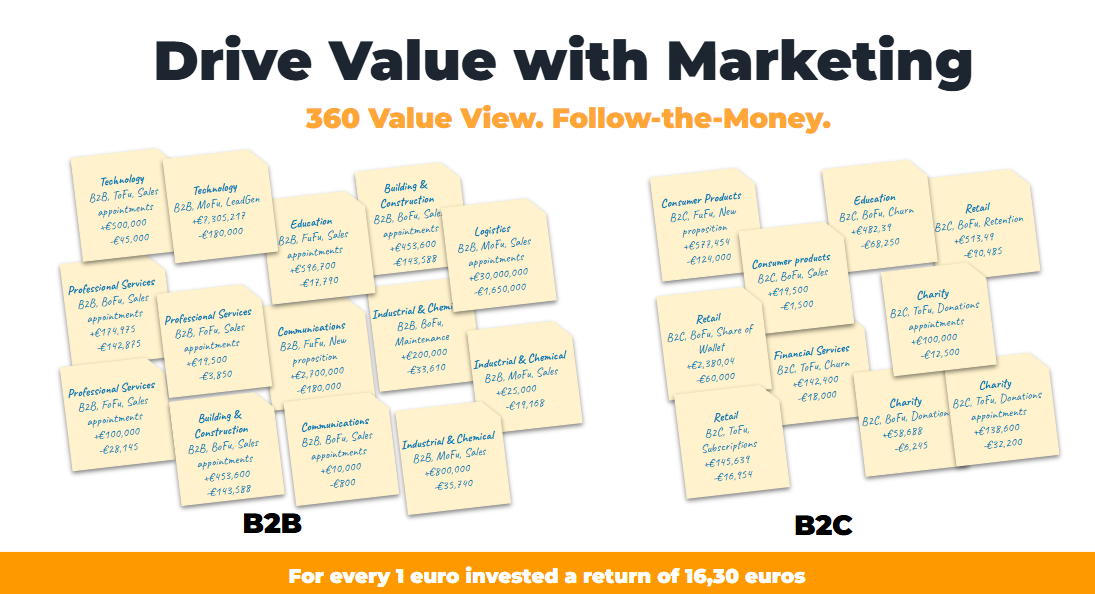
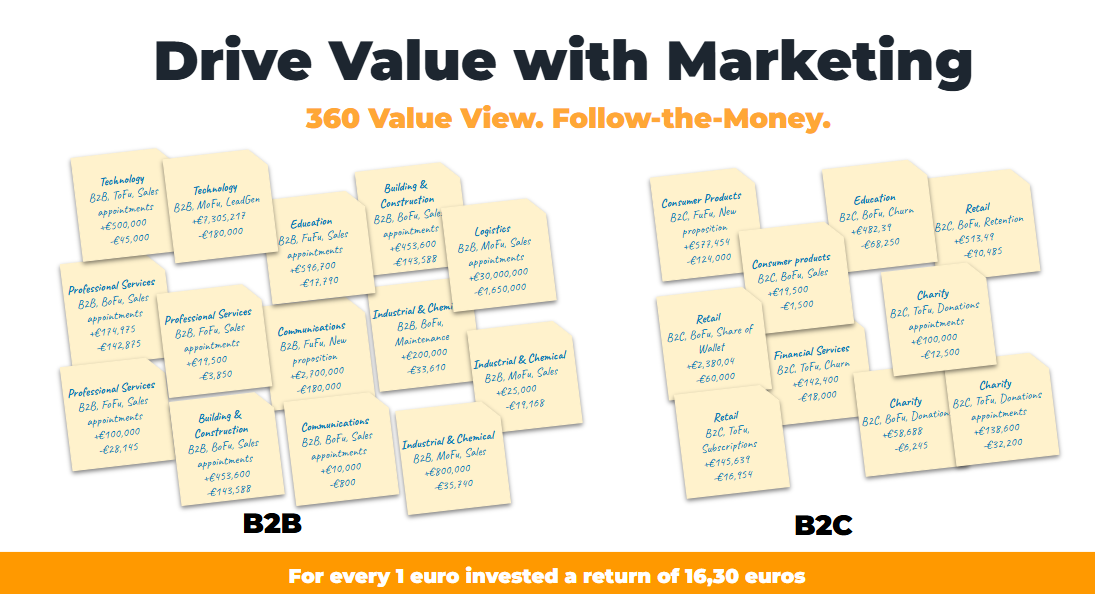
46 successful value engineering business cases and counting cover B2B, B2C, and even charity organisations such as UNICEF. The pattern is unmistakable: Value Engineering delivers an average return of 16.30 euros for every 1 euro invested.
Within just three months, all plans are completed, 90% approved, and 85% implemented. Each business case was built entirely on conservative ROI projections that excluded halo effects or adjacent gains. Conservative meant that if a 15% uptake seemed reasonable while the current conversion was 3%, we still settled at 5%. No halo meant that copying and pasting the results from one business unit to multiple others was not included in the calculation.
Become a Value Engineer
The final step is discipline. Value Engineers create and manage a Business Case Portfolio Backlog — a living roadmap that continually prioritises the highest-value customer experiences. It guides:
- Where to invest?
- What to automate?
- Which experiences to scale?
- Which workflows to sunset?
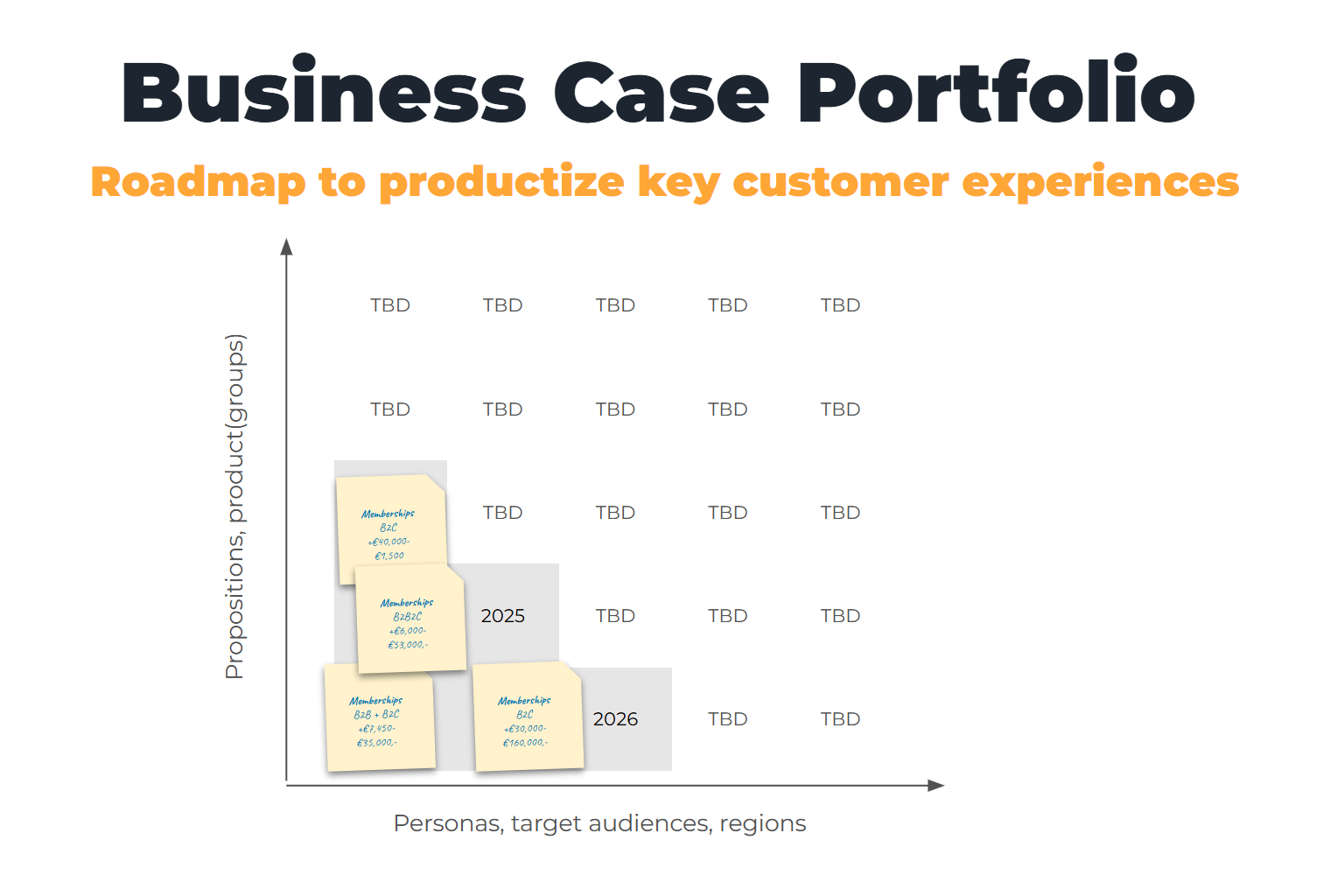
This turns fragmented initiatives into a unified, value-driven strategy. And it earns marketing a seat at the revenue table. Every company hides gold nuggets in its customer data. Don’t leave them untapped. Uncover them with Value Engineering and boost your company and your career.

Related posts
Keep reading for more marketing technology information!
Service-as-a-Software: Scale Services Like Software with AI
Value Engineering 101. Why, What, and How?
The Real Value of AI: From Faster Horses to New Economies